If your Orinda home sits on a road the City does not maintain, can you hand a buyer the recorded agreement that says who pays to repave it? Lenders ask that early in many Orinda sales. Orinda's proposed assistance program for private roads asks it as well.
The City's draft help depends almost entirely on documents. These include an offer of dedication on a recorded subdivision map, a pavement condition score, and a maintenance agreement among the owners. A buyer's lender asks about the same records. If you sell on a private road, gather these records before your listing goes live. Finding them after a buyer has the home in contract costs you time and leverage.
The Lender's Question Comes First
The Fannie Mae Selling Guide covers homes on community-owned or privately owned and maintained streets. For these homes it calls for an adequate, legally enforceable street maintenance agreement or covenant, recorded in the local land records. The Guide says the agreement should spell out each party's share of repair costs and the remedies if someone defaults. In most cases its term should be perpetual and bind future owners. It also says no separate agreement is needed in a state whose statutes define owners' responsibilities for maintaining and repairing private streets.
California's Civil Code Section 845 addresses maintenance of private rights-of-way. It says the owner of an easement in the nature of a private right-of-way "shall maintain it in repair," and it sets a default rule for splitting costs:
"In the absence of an agreement, the cost shall be shared proportionately to the use made of the easement by each owner."
Why So Many Orinda Sales Run Into It
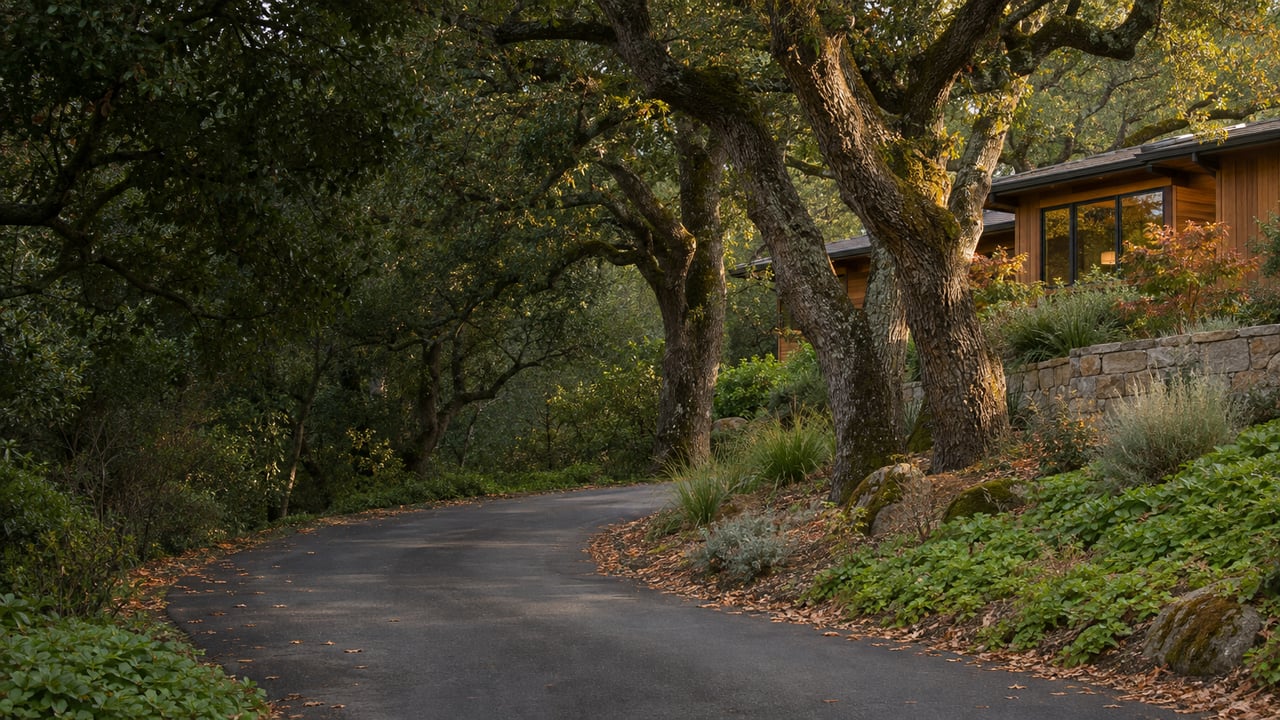
Private roads are common in Orinda. In March 2026, Lamorinda Weekly reported that about 20 to 22 percent of Orinda residents live on private roads the City does not maintain. A City inventory of private road sections dated February 7, 2025 lists 168,645 feet of private road, about 31.9 miles. In 2024, Lamorinda Weekly put the share at almost one-third of Orinda's 85 miles of residential road, covering roughly 1,500 private-road homeowners. The same report said residents often had not realized they were buying on a private street.
For years, the only official way off that list was City Resolution 59-18, adopted September 4, 2018. It requires a road to connect to a public street, provide a circulation benefit, and be brought up to City standards at no cost to the City. Those standards include 20 years of remaining pavement life, a minimum width of 16 feet, emergency access and clear title to the right-of-way. Lamorinda Weekly reported that the acceptance process it describes has never been used.
Pressure to change that grew in 2024. The City received more than 60 letters in four weeks about road surfaces, drain costs, damage from utility work, sinkholes and potholes, and the Council formed a committee to study private roads and drainage. The Council created the Infrastructure Committee on February 6, 2024. It funded a private roads questionnaire on April 7, 2025, and has extended the committee's term through the end of December 2026.
The Draft Menu Sorts Roads by Their Paperwork
Vice Mayor Darlene Gee and Councilmember Malkani sit on the committee. On October 7, 2026, City Manager Linda Smith sent it a memo recommending that the City Council adopt a "Private Infrastructure Assistance Program." The memo says funding for many of the efforts could come from Measure R and roadway maintenance fees. The document is labeled "PROPOSED," and any program needs a City Council vote. Each option has its own entry requirement, and most of those requirements are documents or measurements:
| Draft program | What a road needs to qualify | What the City would do |
|---|---|---|
| Road acceptance | Petition from at least 50% of owners. Initial focus on roads with an offer of dedication on a recorded subdivision map | Take on maintenance permanently once standards are met |
| Maintenance agreement | Pavement at PCI 70 or better. Recorded agreement allowing public use, with indemnification and insurance terms | Perform specified pavement maintenance for the agreement's term |
| Assessment district | At least 60% of owners supporting formation, followed by an Engineer's Report and weighted ballot | Pay the roughly $25,000 setup cost, after a $1,000 deposit from supporting owners |
| Road grant | Owners deposit their share plus a 10% contingency into escrow | Fund 30% of eligible construction costs |
| Storm drain grant | Privately owned pipe at least 10 inches wide carrying runoff from a public road | Up to 50% of eligible costs, capped at $6,500 per owner |
| Technical assistance | Request to the City | Engineering help, including with private maintenance agreements under Civil Code Section 845 |
The City has considered changes since Resolution 59-18. The March 3 staff report proposed replacing the 20-year pavement-life standard with a five-year threshold and letting roads maintained by an HOA participate. The October memo says the committee plans to recommend expanding eligibility to HOAs and relaxing the acceptance criteria. Under the proposal, road and storm drain grant applications would generally be accepted in January and February so requests can go into the annual budget.
What the Numbers Look Like on a Typical Street
The committee's August draft used a model road based on Orinda's averages: 757 feet long, serving 7.5 homes, with a $35,000 repaving job. The draft estimated the City would spend about $5,000 a year to absorb a typical road into the public network. Its grant example covered two streets a year and $70,000 in construction. The City would pay $21,000 and owners $49,000, about $3,300 for each of 15 owners.
Those figures put the pavement cost of one street in the low thousands per household. Who pays is the question a buyer and lender will ask. The October memo also notes that grant-funded projects would probably cost more than privately funded ones because state law requires prevailing wage. A road group comparing a grant with a private contract would need to compare total costs, not just the City's percentage.
Funding has divided the Council. At the March 3 meeting, Mayor Brandon Iverson pointed to HOAs' ability to raise assessments. Vice Mayor Gee said the City funds roads from several sources besides property taxes. Lamorinda Weekly counted 21 written comments on the item, 19 of them supporting the committee's framework. The draft program's fiscal note adds a Senior Civil Engineer to run it, at about $240,000 in the first year.
Orindawoods Shows the Limits of a City Agreement
Orinda already has one maintenance agreement in place, which shows what the maintenance-agreement option could look like. Under a 1992 agreement, the City maintains the paved surfaces, curbs and gutters on Village Gate Road, Ridge Gate Road and Watchwood Circle in Orindawoods. Drainage, lighting, sidewalks and landscaping are excluded. In June 2022, Lamorinda Weekly reported that the Council voted 3–2 against ending the agreement, so it renewed automatically for five years.
Committee slides dated May 27, 2026 described the Orindawoods arrangement as the City maintaining pavement but not the subbase, with the owner remaining liable. The October memo says the City's insurer is reviewing the 1992 agreement, and that liability questions with the insurer have to be settled before the new maintenance program takes final shape.
Building the Road File Before You List
All of this points to work a seller can do now, whether or not the program is adopted. Everything below is a record that already exists or a measurement someone can take:
- The recorded maintenance agreement or covenant, if one exists, with each owner's cost share and default remedies. This is the record Fannie Mae's guide asks about.
- The subdivision map, checked for an offer of dedication. The draft acceptance program starts with roads that have one.
- A current read on pavement condition. PCI 70 is the proposed entry point for City maintenance agreements.
- Records of past road and drain work, including invoices, how costs were split, and which neighbors paid.
- HOA documents, if an association maintains the road. The committee plans to recommend that HOA roads become eligible.
These records can help a seller answer a buyer's road questions during escrow. Gaps found after an offer is accepted tend to come back as contingency items or credit requests.
Questions Orinda Sellers Ask
Will the program make my private road public?
The road acceptance option could make some roads public, starting with those that have an offer of dedication on a recorded subdivision map. Owners would need a petition backed by at least 50 percent of the owners on the road, and any required improvements first. The City Council would then decide by resolution.
What does the draft storm drain grant cover?
The draft program includes a grant for a privately owned pipe at least 10 inches in diameter carrying runoff from an upstream point on a public road. The City would pay up to 50 percent of eligible costs, capped at $6,500 per owner.
On a private road, part of preparing to sell is gathering documents. Tomaj Trenda handles that file the same way he handles contractors and staging, so your agreement, map and pavement history are ready when a buyer's lender asks. Request a Free Seller Consultation & Home Valuation, and we'll review your road's records before you list.